
Dental implants are one of the most reliable ways to replace missing teeth. They are designed to look natural, function like real teeth, and support long-term oral health. Because of their success rate, many people assume implants work for everyone.
But dental implants are not a one-size-fits-all treatment.
Some patients may not be ideal candidates right now due to health, lifestyle, or anatomical factors. In many cases, these issues can be addressed. In others, alternative treatments may be safer.
If you are exploring tooth replacement in La Jolla, San Diego, or nearby communities, understanding implant candidacy can help you make informed decisions.
What Makes Someone a Good Implant Candidate?
Before discussing who is not a candidate, it helps to understand what dentists look for.
A good implant candidate typically has:
- Healthy gums
- Adequate jawbone volume
- Good general health
- Consistent oral hygiene habits
- A commitment to follow-up care
Dental implants rely on the body’s ability to heal and integrate the implant into the bone. When healing or support is compromised, risks increase.
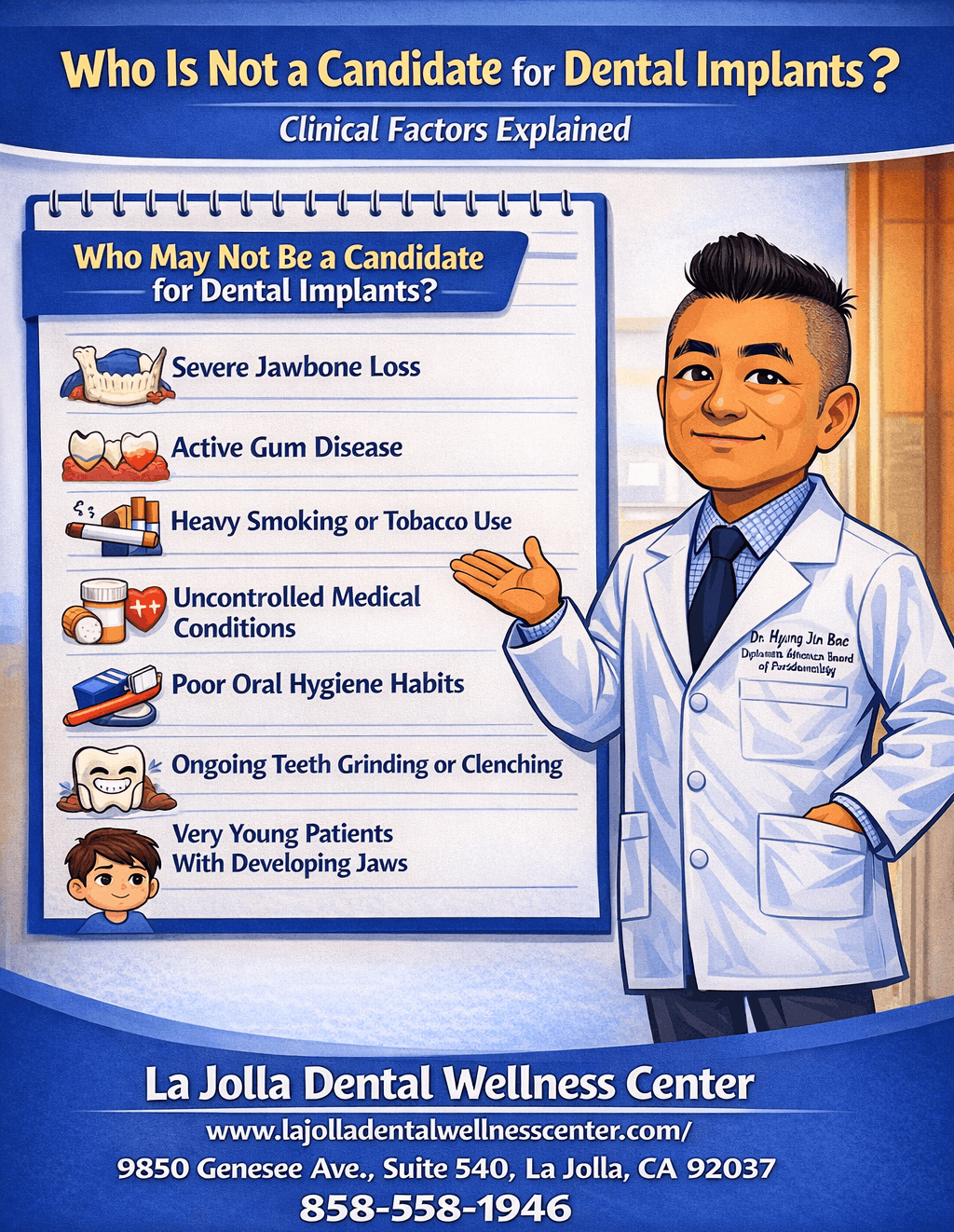
Who May Not Be a Candidate for Dental Implants?
1) Severe Jawbone Loss
Dental implants need enough bone for support. If the jawbone is too thin or soft, the implant may not stabilize properly.
Bone loss often occurs after:
- Long-term missing teeth
- Advanced gum disease
- Infection
- Trauma
- Ill-fitting dentures
However, bone loss does not always mean implants are impossible.
Many patients become candidates after bone grafting or sinus lift procedures. A 3D scan helps determine what is possible.
2) Active Gum Disease
Untreated periodontal disease is one of the leading risk factors for implant problems.
Gum infection can damage the tissues that hold an implant in place. It can also lead to peri-implantitis, an inflammatory condition around implants.
Common signs include:
- Bleeding gums
- Swelling
- Gum recession
- Persistent bad breath
Gum disease usually needs to be treated first. Once the gums are stable, implants may be reconsidered.
3) Heavy Smoking or Tobacco Use
Smoking reduces blood flow and slows healing. This affects how well implants fuse to bone.
Studies consistently show higher complication rates among smokers. These may include:
- Delayed healing
- Higher infection risk
- Greater implant failure rates
This does not always rule out implants, but it raises caution. Patients who quit or reduce smoking before and after surgery often see better outcomes.
4) Uncontrolled Medical Conditions
Certain health conditions can interfere with healing and immune response.
These include:
- Uncontrolled diabetes
- Autoimmune disorders
- Conditions requiring immunosuppressive drugs
- Recent radiation therapy to the jaw
- Severe osteoporosis under some medications
Medical clearance and coordination with a physician may be needed. Many patients with controlled conditions can still receive implants safely.
5) Poor Oral Hygiene Habits
Implants require long-term maintenance. Brushing, flossing, and professional cleanings remain essential.
Patients who struggle with oral care may face higher risks of infection around implants.
A dentist may recommend improving hygiene habits before proceeding. This protects both natural teeth and future implants.
6) Ongoing Teeth Grinding or Clenching
Chronic bruxism places strong forces on teeth and implants. Excess pressure can stress the implant and surrounding bone.
This does not automatically exclude implants, but protection is often needed. A custom night guard and bite adjustment may be recommended.
7) Very Young Patients With Developing Jaws
Dental implants are usually not placed until jaw growth is complete.
If placed too early, implants may shift as the jaw develops. This can affect alignment and appearance.
Temporary solutions can maintain space until the right time.
Borderline Candidates: Not Now, But Possibly Later
Many patients fall into a “not yet” category rather than a permanent “no.”
You may still become a candidate after:
- Treating gum disease
- Completing bone grafting
- Improving oral hygiene
- Stabilizing medical conditions
- Quitting smoking
- Managing bruxism
This is why a personalized evaluation matters.
At La Jolla Dental Wellness Center, candidacy decisions are based on careful imaging, health history, and long-term planning rather than quick recommendations.
Are Dental Implants Still Worth It If You Have Risk Factors?
This is a common and valid question.
Dental implants can offer:
- Stable chewing function
- Jawbone preservation
- Natural appearance
- Long-term reliability
But every treatment must balance benefits and risks.
For some patients, preparatory care makes implants possible. For others, alternatives may provide a safer path.
An ethical provider will explain both.
Alternatives if Implants Are Not Ideal
If implants are not recommended, there are still effective ways to replace teeth.
Dental Bridges
Bridges use nearby teeth for support. They restore function and aesthetics without surgery.
Partial or Full Dentures
Modern dentures are more comfortable and natural-looking than many expect. They can replace multiple missing teeth at a lower cost.
Resin-Bonded Bridges
These conservative options may work for certain front teeth.
The right choice depends on your goals, health, and budget.
What a Proper Implant Evaluation Includes
A true implant evaluation is more than a quick look.
It often includes:
- 3D CBCT imaging
- Bone quality assessment
- Gum health evaluation
- Medical history review
- Bite and jaw analysis
- Discussion of goals and expectations
This process helps ensure safe and predictable outcomes.
Dental Implants in La Jolla and San Diego
Patients in La Jolla, San Diego, Del Mar, and surrounding communities often explore implants to regain comfort and confidence.
For the right candidate, implants can be a strong long-term solution. But the best treatment is always the one suited to your individual health and needs.
La Jolla Dental Wellness Center focuses on thoughtful planning and patient education so individuals can make informed choices.
FAQs About Implant Candidacy
Can seniors get dental implants?
Yes. Age alone does not prevent implants. Overall health and bone quality matter more than age.
Can diabetics get dental implants?
Patients with well-controlled diabetes often can. Uncontrolled diabetes may increase risks, so medical management is important.
What if I was told I don’t have enough bone?
Bone grafting or sinus lifts may help. A 3D scan can confirm options.
Are implants safe long term?
When properly planned and maintained, implants have high long-term success rates. Regular dental visits and home care are essential.
How do I know if I qualify?
A clinical exam and imaging are the only reliable way to determine candidacy.
Find Out What’s Right for You
Missing teeth can affect daily life, from eating to speaking to smiling comfortably. You deserve clear answers about your options.
If you are considering dental implants in La Jolla or the greater San Diego area, a professional evaluation can help you understand what is possible now and in the future.
Schedule a consultation at La Jolla Dental Wellness Center to receive a personalized assessment and guidance tailored to your needs.