
When people hear they need a bone graft before getting dental implants, the reaction is usually the same.
“Does that mean I can’t get implants?”
In most cases, it actually means the opposite. It means your dentist is making sure your implant has the strong foundation it needs to succeed long term.
Dental implants are designed to replace missing teeth in a way that feels stable and natural. But they rely on one critical factor: healthy jawbone. If the bone is too thin or has shrunk over time, a graft may be recommended to rebuild that support before placing the implant.
For many patients in La Jolla and the greater San Diego area, bone grafting is simply part of careful planning, not a setback.
Why Jawbone Strength Matters for Dental Implants
A dental implant is a small titanium post placed into the jawbone to act as an artificial tooth root. Over time, the bone bonds with the implant through a process called osseointegration.
That bond is what gives implants their stability. It’s what allows you to chew comfortably and speak naturally without worrying about movement.
If there isn’t enough bone height or thickness, the implant may not anchor securely. Placing an implant in insufficient bone increases the risk of failure. That’s why proper evaluation comes first.
In modern implant dentistry, we plan for long-term stability, not just short-term placement.
Why Bone Loss Happens After Tooth Loss
Bone loss often begins quietly after a tooth is removed or lost.
Here’s why.
When natural teeth are present, they stimulate the jawbone during chewing. That stimulation keeps the bone strong and dense. Once a tooth is missing, that stimulation stops. The body begins to resorb, or shrink, the unused bone.
This process can start within months.
Common causes of bone loss include:
- Missing teeth that were never replaced
- Advanced gum disease
- Trauma or injury
- Long-term use of traditional dentures
Many patients from La Jolla, UTC, and surrounding coastal communities come in years after losing a tooth and are surprised to learn the bone has gradually thinned.
The good news is that modern bone grafting techniques can often rebuild what was lost.
When Is Bone Grafting Necessary Before Implants?
Not every implant patient needs a bone graft.
A detailed evaluation using digital X-rays or 3D imaging determines whether the jawbone has adequate density and width.
A bone graft may be recommended if:
- The jawbone is too narrow for stable implant placement
- Bone height is insufficient
- Significant bone loss followed a previous extraction
- The sinus cavity is too close to the upper jaw implant site
This is especially common in the back upper jaw, where the sinus naturally limits available bone.
Careful imaging allows your dentist to measure the area precisely and determine whether grafting is necessary.
If you’re unsure whether bone grafting applies to your situation, a detailed implant consultation can provide clarity. Modern 3D imaging makes it possible to evaluate bone levels precisely and discuss your options the same day.
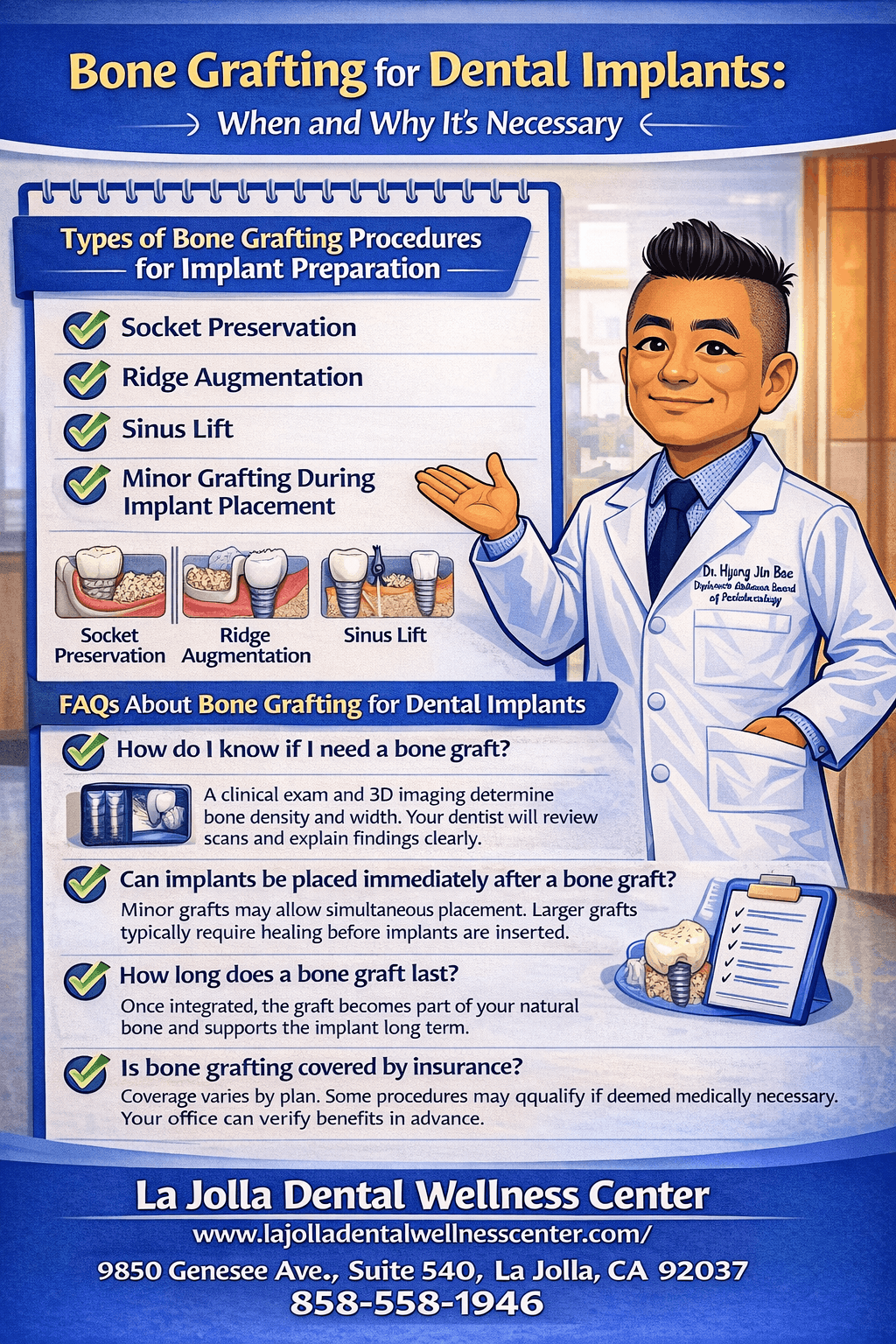
Types of Bone Grafting Procedures for Implant Preparation
The type of graft depends on the location and extent of bone deficiency.
Socket Preservation
Performed at the time of tooth extraction, socket preservation involves placing graft material into the empty socket to maintain its shape.
This proactive step often reduces the need for more extensive grafting later and is common in implant-focused practices.
Ridge Augmentation
If the jaw ridge has become too thin, ridge augmentation rebuilds width using graft material.
This strengthens the site and prepares it for future implant placement. Healing usually takes several months before the implant is placed.
Sinus Lift
In the upper back jaw, the sinus cavity sometimes limits available bone. A sinus lift gently raises the sinus membrane and places graft material underneath.
This creates the necessary depth for secure implant placement.
Sinus lifts are common in implant dentistry and have predictable outcomes when properly planned.
Minor Grafting During Implant Placement
In certain cases, small areas of deficiency can be corrected at the same time the implant is placed.
This depends on bone stability and clinical judgment.
What Is Bone Graft Material Made Of?
Patients often ask whether the graft is their own bone.
Bone graft material may include:
- Biocompatible synthetic materials
- Processed donor bone
- Your own bone in select cases
The material acts as a scaffold. Over time, your body replaces it with natural bone tissue. Once integrated, it becomes part of your jaw’s structure and supports the implant securely.
What to Expect During and After the Procedure
Bone grafting is typically performed under local anesthesia. Sedation options may be available for patients who feel anxious.
The procedure itself is often shorter than expected. Minor grafts may take under an hour.
Afterward, mild swelling or soreness is common for a few days. Most patients return to normal routines within 24 to 48 hours.
Healing beneath the surface takes longer.
Small grafts may integrate within three to four months. Larger grafts or sinus lifts may require four to six months before implant placement.
This healing period is essential. Rushing the process can compromise implant stability.
Healing time varies from patient to patient. A personalized treatment plan ensures your implant is placed at the right time for long-term success rather than rushing the process.
Is Bone Grafting Safe?
Bone grafting is a well-established procedure in implant dentistry. When planned with proper imaging and performed carefully, complications are uncommon.
As with any surgical procedure, potential risks include swelling, infection, or delayed healing. Following post-operative instructions reduces these risks significantly.
Candidacy depends on overall health, gum condition, and lifestyle factors such as smoking.
Does Needing a Bone Graft Mean Implants Will Fail?
No.
In fact, recommending a bone graft often improves the likelihood of implant success. It ensures the implant has the structural support needed for long-term function.
Patients who were told years ago that they were not candidates for dental implants may now qualify thanks to advances in grafting techniques and imaging technology.
How Bone Grafting Protects Long-Term Implant Success
Dental implants are designed to last many years with proper care. Their longevity depends heavily on bone integration.
Bone grafting helps:
- Improve implant stability
- Preserve facial structure
- Reduce risk of implant complications
- Support long-term durability
For patients considering dental implants in La Jolla, grafting is not an obstacle. It’s a foundation.
FAQs About Bone Grafting for Dental Implants
How do I know if I need a bone graft?
A clinical exam and 3D imaging determine bone density and width. Your dentist will review scans and explain findings clearly.
Can implants be placed immediately after a bone graft?
Minor grafts may allow simultaneous placement. Larger grafts typically require healing before implants are inserted.
How long does a bone graft last?
Once integrated, the graft becomes part of your natural bone and supports the implant long term.
Is bone grafting covered by insurance?
Coverage varies by plan. Some procedures may qualify if deemed medically necessary. Your office can verify benefits in advance.
Considering Dental Implants in La Jolla?
If you’re exploring dental implants in La Jolla, Pacific Beach, UTC, or greater San Diego, the first step is a detailed evaluation.
Many patients assume bone loss disqualifies them from implants. In reality, modern bone grafting often expands eligibility.
A thoughtful treatment plan that includes grafting when necessary helps ensure your implant is stable, functional, and built to last.
If you’ve been told you may need a bone graft, it’s not a red flag. It’s careful planning.