
Dental implants are one of the most reliable ways to replace missing teeth. Many people hear they can last a lifetime. Sometimes they do. But the real answer is more nuanced.
Dental implants are long-lasting, but they are not “set and forget.” Their lifespan depends on health, habits, and proper care.
If you are considering dental implants in La Jolla or San Diego, understanding longevity and risk factors helps you make a confident decision.
This guide explains how long implants last, what affects their lifespan, and how to protect your investment.
The Short Answer
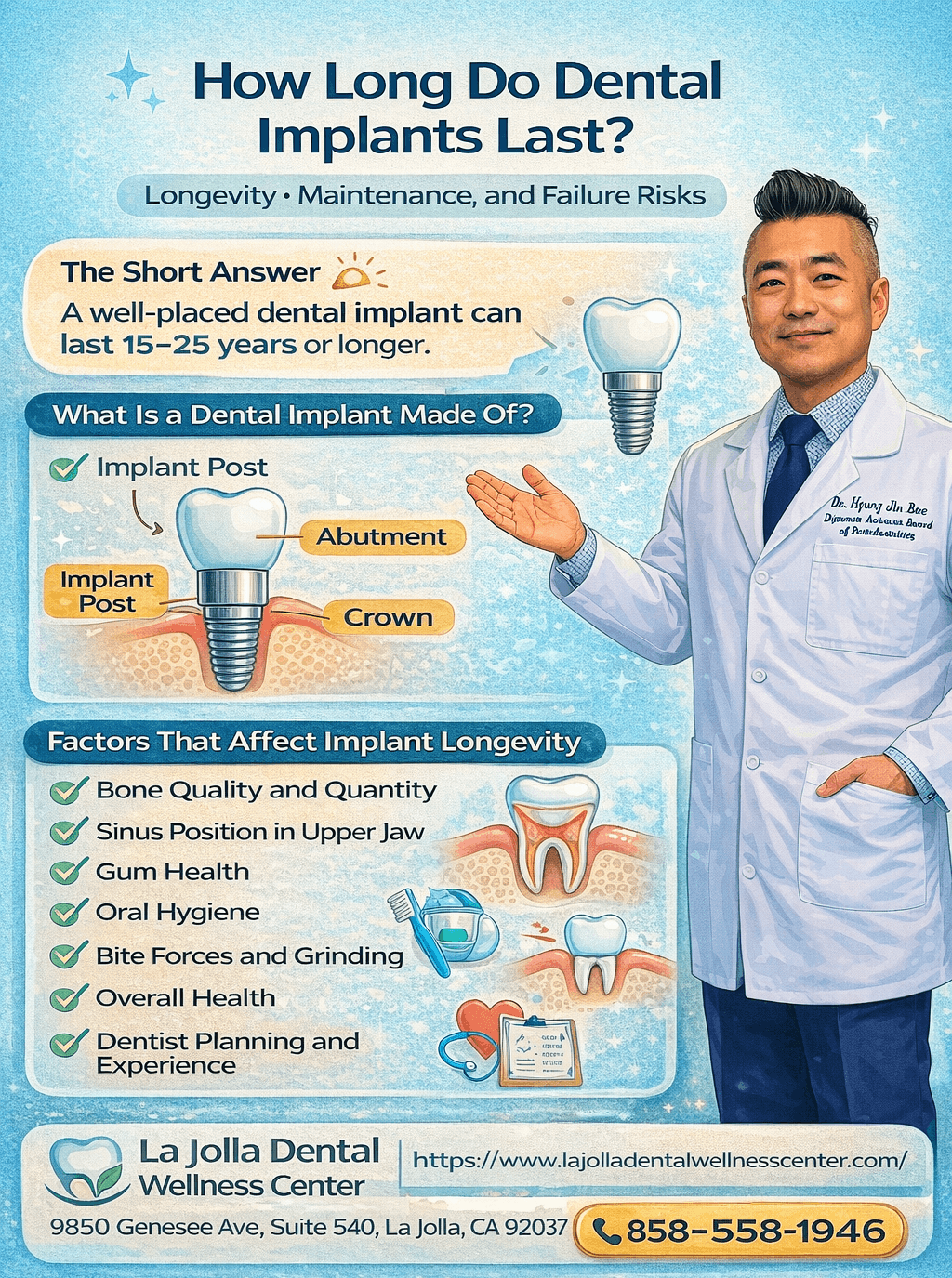
A well-placed dental implant can last 15–25 years or longer.
Some last several decades.
But longevity depends on:
- Bone support
- Gum health
- Bite forces
- Oral hygiene
- Medical history
- Lifestyle habits
- Regular dental visits
The implant post often lasts the longest.
The crown on top may need replacement earlier due to wear.
A simple way to think about implants:
They are built to be long-term solutions, but they still need care.
How Successful Are Dental Implants?
Dental implants have a high success rate when placed in healthy conditions.
Many long-term studies show success rates above 90% over many years when:
- Bone is adequate
- Gums are healthy
- Patients maintain hygiene
- Treatment is properly planned
Success does not mean zero maintenance. It means the implant remains stable and functional.
At La Jolla Dental Wellness Center, implant planning focuses on long-term health and realistic outcomes, not quick fixes.
What Is a Dental Implant Made Of?
Understanding longevity starts with the parts.
Implant Post
A small titanium post placed in the jawbone. Titanium bonds with bone through osseointegration.
Abutment
A connector that links the implant to the crown.
Crown
The visible tooth. This handles chewing forces.
The post is designed for decades of stability.
The crown may need replacement after years of normal use.
Why Implants Can Last So Long
Implants integrate with bone. This creates:
- Strong support
- Stability during chewing
- Reduced bone loss compared to missing teeth
- A natural feel
Unlike bridges, implants do not rely on neighboring teeth.
Unlike dentures, they do not rest on the gums.
When placed correctly in healthy bone, they can be very durable.
Factors That Affect Implant Longevity
Bone Quality and Quantity
Strong bone provides a stable foundation.
If bone is thin, dentists may recommend bone grafting before placement. This improves support and long-term success.
Sinus Position in Upper Jaw
For upper back teeth, the sinus can limit bone height.
A sinus lift may be recommended to create safe support.
Proper preparation improves implant longevity.
Gum Health
Healthy gums protect the bone around implants.
Peri-implantitis, an infection around implants, is a leading cause of failure.
Healthy gums are essential.
Oral Hygiene
Implants cannot get cavities, but the surrounding gums can get infected.
Daily brushing and flossing matter.
Bite Forces and Grinding
Heavy grinding can overload implants.
Nightguards help protect them. Many long-term implant patients use one.
Overall Health
Conditions like uncontrolled diabetes or smoking can affect healing and stability.
Healthy bodies support healthy implants.
Dentist Planning and Experience
Placement angle and position matter.
Implants must be planned for:
- Bite balance
- Bone support
- Cleanability
Careful planning improves longevity.
How Long Does the Implant Crown Last?
Crowns take the daily chewing load.
Many last 10–15 years or more.
Some last longer with good care.
Crowns may be replaced due to:
- Wear
- Chipping
- Bite changes
Replacing a crown does not mean the implant failed. It is similar to replacing a worn filling.
Dental Implants vs Bridges and Dentures
Understanding comparisons helps patients choose wisely.
Dental Implants
- Long-term solution
- Preserve bone
- Do not affect nearby teeth
- Feel natural
Bridges
- Often last 7–15 years
- Require shaping nearby teeth
- Do not stop bone loss
Dentures
- Lower upfront cost
- May loosen over time
- Do not preserve bone
Many La Jolla patients choose implants because they want stability for active lifestyles and dining out comfortably.
Real-World Local Scenario
In coastal San Diego communities like La Jolla, many patients replace old bridges or loose dentures with implants for a more secure feel.
Patients who keep regular cleanings and protect their gums often maintain implants for many years.
In clinical practice, long-term success is most common when patients treat implants like natural teeth and attend routine checkups.
What Can Cause Implant Failure?
Implant failure is uncommon but possible.
Peri-Implantitis
Infection leading to bone loss.
Smoking
A major risk factor for healing and gum health.
Poor Hygiene
Plaque buildup can damage supporting tissue.
Uncontrolled Medical Conditions
Some conditions affect healing.
Excessive Bite Force
Grinding without protection adds stress.
Early detection improves outcomes.
Warning Signs to Watch For
Contact a dentist if you notice:
- Gum swelling
- Bleeding around the implant
- Pain or discomfort
- Loose feeling crown
- Difficulty chewing
Small issues are easier to treat early.
How to Make Implants Last Longer
Brush and Floss Daily
Treat them like natural teeth.
Schedule Regular Checkups
Professional cleanings protect gum health.
Wear a Nightguard if Needed
Reduces overload.
Avoid Using Teeth as Tools
Prevents damage.
Maintain Overall Health
Supports healing and stability.
Implant Longevity Timeline
First Year
Healing and integration occur. Good hygiene is critical.
Years 1–5
Stable function with regular maintenance.
Years 5–15
Possible crown wear. Implant usually remains stable.
15+ Years
Many implants continue functioning well with care.
Longevity improves with consistent maintenance.
Clinical Decision Summary
Dental implants can last decades when:
- Bone and gums are healthy
- Placement is well planned
- Hygiene is maintained
- Regular visits continue
They are durable but not maintenance-free.
A health-first approach leads to the best outcomes.
Common Implant Questions
Do implants get cavities?
No, but gums can get infected.
Can implants fail years later?
Yes, but risk is lower with good care.
Are implants stronger than teeth?
They are strong but should be treated carefully.
Is care complicated?
No. Normal hygiene and checkups are key.
How to Know if Implants Are Right for You
Online research cannot measure bone levels or gum health.
A professional exam is the best first step.
If you are considering dental implants in La Jolla or San Diego, a consultation provides clarity on options and timelines.
La Jolla Dental Wellness Center offers implant evaluations focused on long-term health and comfort.
No treatment is recommended unless it is right for your oral health.
Gentle Next Step
If you are exploring tooth replacement options, a consultation can answer your questions clearly and without pressure.
Call 858-558-1946 to schedule your dental implant consultation.
A strong smile starts with a healthy foundation.