
Invisalign has changed how many people straighten their teeth. Clear aligners are subtle, removable, and fit easily into daily life.
But Invisalign is not right for every smile.
Some patients are excellent candidates and see smooth progress. Others may need braces or a different approach for safe and predictable results.
The difference comes down to case selection. Invisalign is a medical treatment that moves teeth through bone and gum tissue. That movement must be planned carefully.
If you are considering Invisalign in La Jolla or the greater San Diego area, this guide explains who usually qualifies, who may not, and how dentists make that decision.
Why Invisalign Case Selection Matters
Clear aligners are powerful, but they are still a tool. The tool must match the case.
When Invisalign is used for the right patient:
- Treatment is more predictable
- Teeth and gums stay healthier
- Bite function improves
- Results are more stable long term
When used for the wrong case:
- Treatment can take longer
- Extra refinements may be needed
- Bite issues can develop
- Patients may feel frustrated
A careful exam protects your health and your investment.
At La Jolla Dental Wellness Center, Invisalign planning begins with digital scans, bite analysis, and a full oral health review before recommendations are made.
How Do Dentists Decide if Invisalign Will Work?
Dentists look at several clinical factors.
Tooth Position
Are teeth crowded, spaced, or rotated?
Bite Relationship
How do upper and lower teeth fit together?
Gum and Bone Health
Are the support structures strong enough?
Patient Habits
Will aligners be worn consistently?
Treatment Goals
Is the goal cosmetic, functional, or both?
When these factors align, Invisalign can be very effective.
A simple rule many dentists follow is this:
Clear aligners work best when the case is healthy, realistic, and the patient is committed.
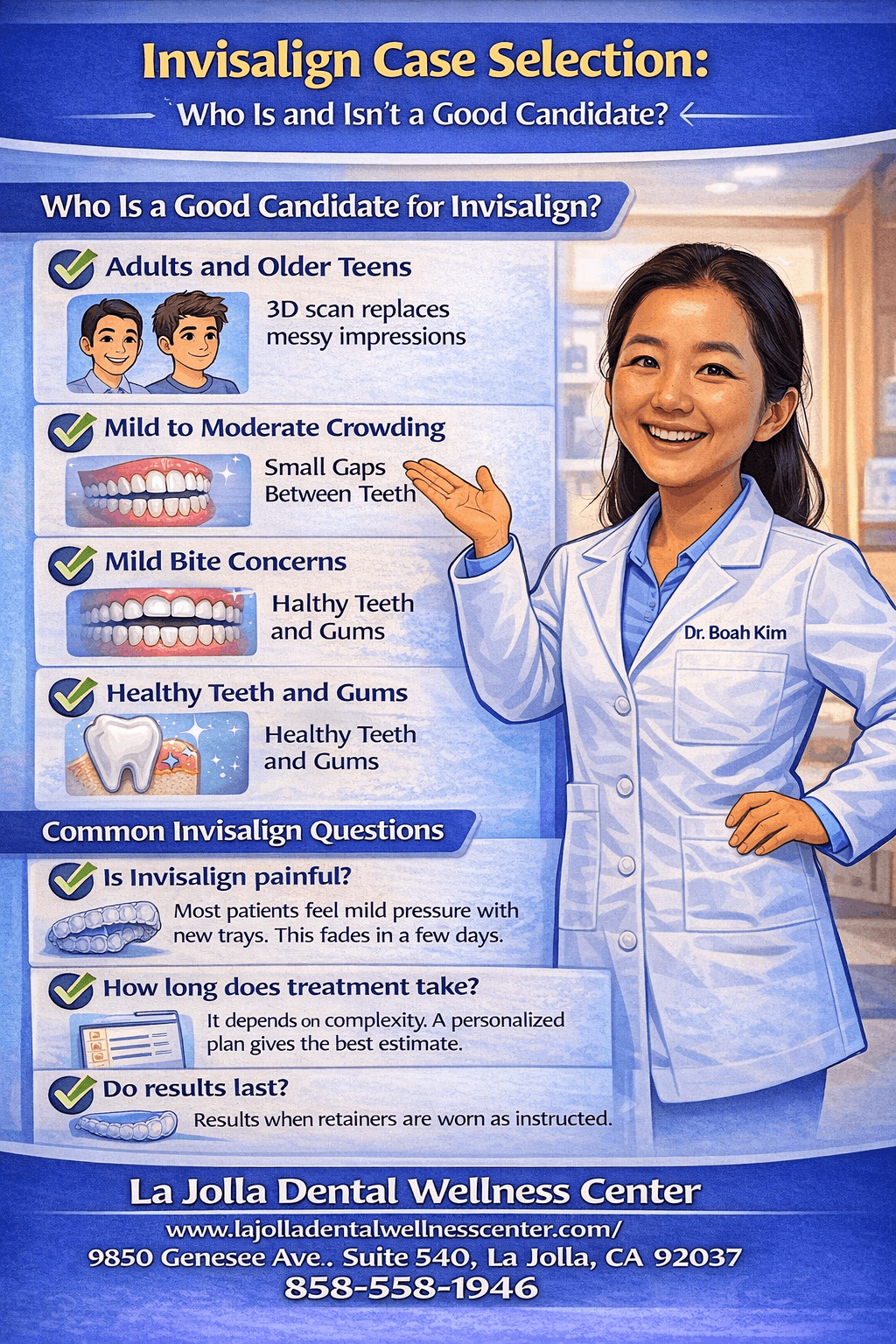
Who Is a Good Candidate for Invisalign?
Adults and Older Teens
Invisalign works best once jaw growth is mostly complete.
Many La Jolla adults choose Invisalign because it fits professional settings. Coastal professionals, UCSD area residents, and people who attend frequent social events often prefer a discreet option.
Age itself rarely disqualifies someone. Oral health matters more.
Mild to Moderate Crowding
This is one of the most common Invisalign cases.
Examples:
- Slightly overlapping front teeth
- Teeth that shifted after braces years ago
- Minor rotations
A common La Jolla scenario is adults who had braces as teens and noticed crowding return in their 30s or 40s. Many of these patients are strong aligner candidates.
Small Gaps Between Teeth
Spacing is very predictable with aligners.
Gaps may happen due to:
- Natural tooth size differences
- Past dental work
- Gradual shifting over time
Aligners can close spaces gently when the bite is stable.
Mild Bite Concerns
Invisalign can improve:
- Mild overbite
- Mild underbite
- Limited crossbite cases
Severity matters. Larger bite problems need deeper evaluation.
Patients Who Can Wear Aligners 20–22 Hours Daily
Consistency is critical.
Good candidates:
- Follow instructions carefully
- Wear trays daily
- Keep track of aligners
- Attend checkups on time
Invisalign works only when worn as directed.
Healthy Teeth and Gums
Before starting:
- Cavities should be treated
- Gum disease should be controlled
- Bone support should be stable
Healthy foundations support safe tooth movement.
Who Is Not a Good Candidate for Invisalign?
Severe Crowding
Very crowded teeth may lack space to move safely.
Dentists sometimes create space using:
- Small enamel reshaping
- Gradual expansion
- Careful staging
But extreme cases may be more predictable with braces.
Major Bite or Jaw Problems
Large jaw mismatches often require more than aligners.
Examples:
- Severe underbite
- Severe overbite
- Significant open bite
- Jaw alignment concerns
These cases may need braces or specialist care.
Patients Who Cannot Wear Aligners Consistently
If trays are worn part time, teeth will not track correctly.
Common issues:
- Forgetting trays after meals
- Removing them for long periods
- Losing aligners often
For these patients, fixed braces may be safer.
Active Gum Disease
Inflamed gums do not respond well to tooth movement.
Warning signs include:
- Bleeding gums
- Gum recession
- Loose teeth
- Bone loss
Gum health should be treated first.
Very Young Children
Children with active jaw growth may benefit from growth-guided orthodontics before aligners.
Can Invisalign Fix Crowded Teeth Without Braces?
Yes, many mild and moderate cases can be treated with aligners alone.
Invisalign can:
- Gradually align crowded teeth
- Create small amounts of space
- Improve smile appearance
But severe crowding may need other solutions. A digital scan helps determine limits.
Why Are Some Patients Told They Are Not Candidates?
Usually for clinical reasons.
Common reasons:
- Bite complexity
- Gum or bone concerns
- Need for large tooth movements
- Low compliance expectations
A responsible dentist will explain alternatives rather than forcing aligners where they do not fit.
Is Invisalign Worth It for Adults?
For many adults, yes.
San Diego adults often choose Invisalign because:
- It fits busy schedules
- It is discreet
- Oral hygiene is easier than braces
- Comfort is improved
In clinical practice, many adults who assume they are not candidates actually qualify after proper digital planning and bite evaluation.
What Happens at an Invisalign Consultation?
A true consultation is detailed and health focused.
Digital Scans and Photos
3D scans map tooth position precisely.
Bite Evaluation
Your dentist checks how teeth function together.
Gum and Bone Review
Healthy support structures are essential.
Treatment Simulation
Many patients preview potential movement.
Honest Recommendation
You receive clear guidance on whether Invisalign is appropriate.
At La Jolla Dental Wellness Center, recommendations focus on long term oral health, not quick cosmetic fixes.
Clinical Decision Summary
Invisalign works best when:
- Teeth and gums are healthy
- Bite issues are mild to moderate
- The patient can wear aligners consistently
Cases with severe crowding, major bite problems, or active gum disease may need alternatives.
Proper evaluation protects your smile.
Common Invisalign Questions
Is Invisalign painful?
Most patients feel mild pressure with new trays. This fades in a few days.
How long does treatment take?
It depends on complexity. A personalized plan gives the best estimate.
Do results last?
Results last when retainers are worn as instructed.
Is Invisalign only cosmetic?
No. It can improve bite and function.
How to Know if Invisalign Is Right for You
Online quizzes cannot evaluate bite balance, gum health, or bone support.
A professional exam is the only reliable way to know.
If you are exploring Invisalign in La Jolla or San Diego, a consultation gives clarity on options and timelines.
La Jolla Dental Wellness Center provides Invisalign evaluations that focus on health, comfort, and realistic outcomes.
Gentle Next Step
If straightening your teeth has been on your mind, a consultation is a simple first step. You can ask questions, review your scan, and decide without pressure.
To schedule, you can:
- Call the office directly
- Book through the website
- Request a consultation visit
A healthy smile starts with good planning.