
If you’re thinking about improving your smile, you’ve probably come across two popular options: Invisalign and porcelain veneers.
At first glance, they may seem similar. Both can dramatically improve how your teeth look. Both are common cosmetic treatments in La Jolla. But they work in very different ways.
The real question isn’t which one is better overall. It’s which one is better for your specific goals.
Here’s how Invisalign and veneers compare, clinically and cosmetically, so you can make an informed decision.
What Invisalign Does
Invisalign uses a series of clear, removable aligners to gradually shift teeth into better alignment.
It addresses issues like:
- Crowded teeth
- Gaps
- Mild to moderate overbite or underbite
- Crooked teeth
- Orthodontic relapse
Invisalign works by moving the natural teeth into a healthier position over time. Treatment typically takes 6 to 18 months depending on complexity.
For many adults in La Jolla and surrounding San Diego communities, Invisalign offers a discreet way to straighten teeth without metal braces.
What Veneers Do
Porcelain veneers are thin ceramic shells bonded to the front surface of teeth.
They are designed to improve:
- Tooth color
- Shape
- Size
- Minor spacing issues
- Chipped or worn edges
Veneers do not move teeth. Instead, they change how the teeth look by reshaping and covering the visible surface.
Veneers are often completed in two visits and can last 10 to 15 years or longer with proper care.
The Core Clinical Difference
The biggest difference is this:
Invisalign changes tooth position.
Veneers change tooth appearance.
If your primary concern is crooked teeth or bite alignment, Invisalign may be the more appropriate solution.
If your main concern is discoloration, worn edges, or uneven shape, veneers may be more effective.
In some cases, both treatments are combined as part of a smile makeover.
When Invisalign Is the Better Choice
Invisalign is often recommended if:
- Teeth are visibly crowded or overlapping
- There are noticeable gaps
- The bite feels uneven
- You want to preserve natural enamel
- You prefer a reversible treatment option
Because Invisalign moves your natural teeth into alignment, it improves both aesthetics and function.
For patients exploring Invisalign at La Jolla Wellness Center, digital scans help determine whether alignment concerns are mild, moderate, or complex.
When Veneers May Be More Appropriate
Veneers may be a better choice if:
- Teeth are deeply stained and resistant to whitening
- There are visible chips or cracks
- Teeth appear too small or uneven
- You want a dramatic transformation in a shorter timeframe
Veneers can create uniformity quickly. However, they require reshaping a small amount of enamel, which makes them a long-term commitment.
A cosmetic consultation helps determine whether veneers alone can achieve your goals or if orthodontic movement should happen first.
How This Relates to Dental Implants
While Invisalign and veneers focus on improving existing teeth, dental implants address missing teeth.
If a patient has gaps due to tooth loss, neither Invisalign nor veneers replaces a missing tooth. In these cases, dental implants may be part of the long-term solution.
For example:
- Invisalign may be used to position teeth properly before an implant is placed
- Veneers may be used to enhance nearby teeth for a balanced smile after implant treatment
This is why comprehensive planning is important. Cosmetic and restorative treatments often work together to support both appearance and oral health.
Timeline Comparison
Invisalign treatment typically takes several months to over a year. It requires wearing aligners 20 to 22 hours per day.
Veneers are usually completed in two to three appointments over a few weeks.
If timing is your primary concern, veneers may deliver faster visual results. If long-term alignment and bite health matter more, Invisalign may be worth the wait.
Longevity and Maintenance
Invisalign results can last indefinitely with consistent retainer use.
Veneers typically last 10 to 15 years before replacement may be needed. Longevity depends on oral hygiene and bite habits.
Dental implants, when properly maintained, can last many years and are designed to function like natural teeth.
All options require regular dental visits and proper home care.
Cost Considerations
Costs vary depending on case complexity and number of teeth treated.
In general:
- Invisalign cost depends on treatment length and complexity
- Veneers are priced per tooth
- Dental implants are priced per missing tooth and may involve multiple stages
For some patients, Invisalign may be more cost-effective if alignment is the primary concern. For others, veneers may deliver the aesthetic change they want with fewer treated teeth.
A detailed consultation in La Jolla provides personalized cost estimates and financing options.
Can Invisalign Replace Veneers?
Sometimes.
If teeth are crooked or spaced but otherwise healthy in shape and color, Invisalign alone may eliminate the need for veneers.
However, Invisalign cannot change tooth color or significantly reshape teeth.
That’s why treatment goals matter.
Can Veneers Replace Invisalign?
In certain mild cases, veneers can create the appearance of straighter teeth without orthodontic movement.
However, this does not correct underlying alignment or bite issues.
In cases of significant crowding, placing veneers without correcting alignment may require more enamel reshaping.
An experienced cosmetic dentist evaluates whether orthodontic movement should come first.
What About Combining Invisalign and Veneers?
Some patients choose Invisalign first to align teeth naturally, then place veneers on select teeth to refine color and shape.
This conservative approach often preserves more enamel and creates a balanced result.
Patients who want both functional alignment and aesthetic enhancement often explore this combination.
Which Option Is More Natural?
Both treatments can look natural when planned carefully.
Invisalign works with your existing teeth. Veneers enhance their visible surface. Dental implants are designed to blend with natural teeth when replacement is needed.
The most natural-looking results come from detailed planning, digital imaging, and realistic expectations.
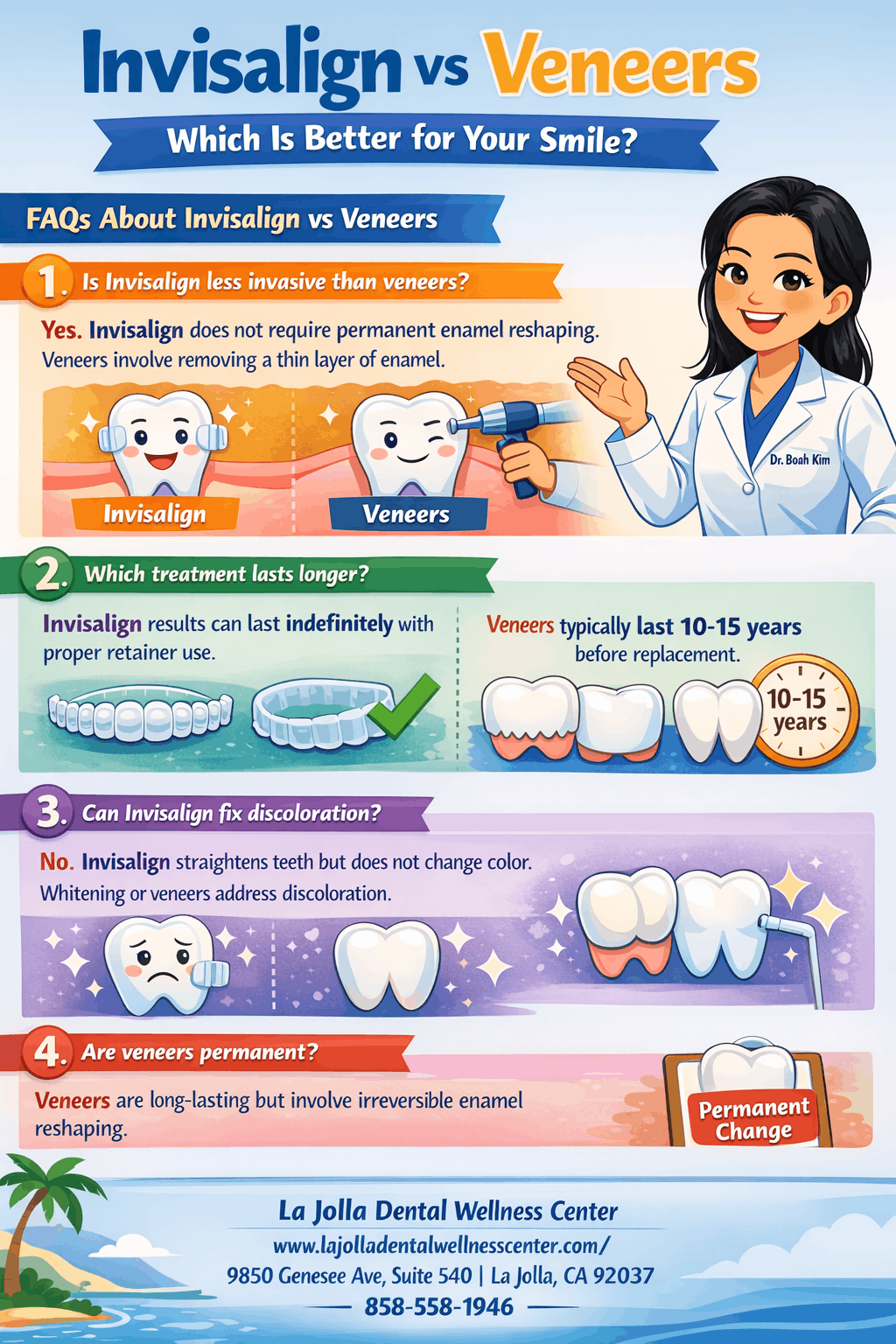
FAQs About Invisalign vs Veneers
Is Invisalign less invasive than veneers?
Yes. Invisalign does not require permanent enamel reshaping. Veneers involve removing a thin layer of enamel.
Which treatment lasts longer?
Invisalign results can last indefinitely with proper retainer use. Veneers typically last 10 to 15 years before replacement.
Can Invisalign fix discoloration?
No. Invisalign straightens teeth but does not change color. Whitening or veneers address discoloration.
Are veneers permanent?
Veneers are long-lasting but involve irreversible enamel reshaping.
Choosing the Right Option in La Jolla
If you’re deciding between Invisalign and veneers in La Jolla, the most important step is a comprehensive evaluation.
Digital imaging, bite analysis, and a conversation about your goals will clarify whether your concern is alignment, appearance, missing teeth, or a combination.
At La Jolla Dental Wellness Center, many patients from La Jolla, UTC, and surrounding San Diego communities begin with a consultation simply to understand their options. There is no one-size-fits-all answer.
If you’re considering Invisalign, a personalized assessment can determine whether clear aligners can achieve your goals. If veneers seem more appropriate, your dentist can explain what that process would involve. If missing teeth are part of the picture, dental implants may also be discussed.
The right treatment is the one that balances function, aesthetics, and long-term health.
Scheduling a consultation allows you to explore your options with clarity and confidence.