
Many teens and adults want straighter teeth but hesitate about metal braces. Invisalign has become a popular option because it is clear, removable, and designed to fit modern lifestyles.
Still, patients often have important questions:
- How does Invisalign actually move teeth?
- How long does treatment take?
- What does daily life look like during Invisalign?
- Is it worth it for adults?
If you are considering Invisalign in La Jolla or the greater San Diego area, this complete guide explains what you should know before starting. The goal is to give honest, clear information so you can make a confident decision.
What Is Invisalign?
Invisalign is a system of clear aligners that gradually straighten teeth. Instead of brackets and wires, it uses a series of transparent trays custom-made for your smile.
Each aligner is:
- Smooth and nearly invisible
- Custom-fit to your teeth
- Designed to move specific teeth at specific times
You wear each set for about one to two weeks before moving to the next.
Over time, small movements add up to noticeable alignment.
Because aligners are removable, many patients find them easier to live with compared to braces.
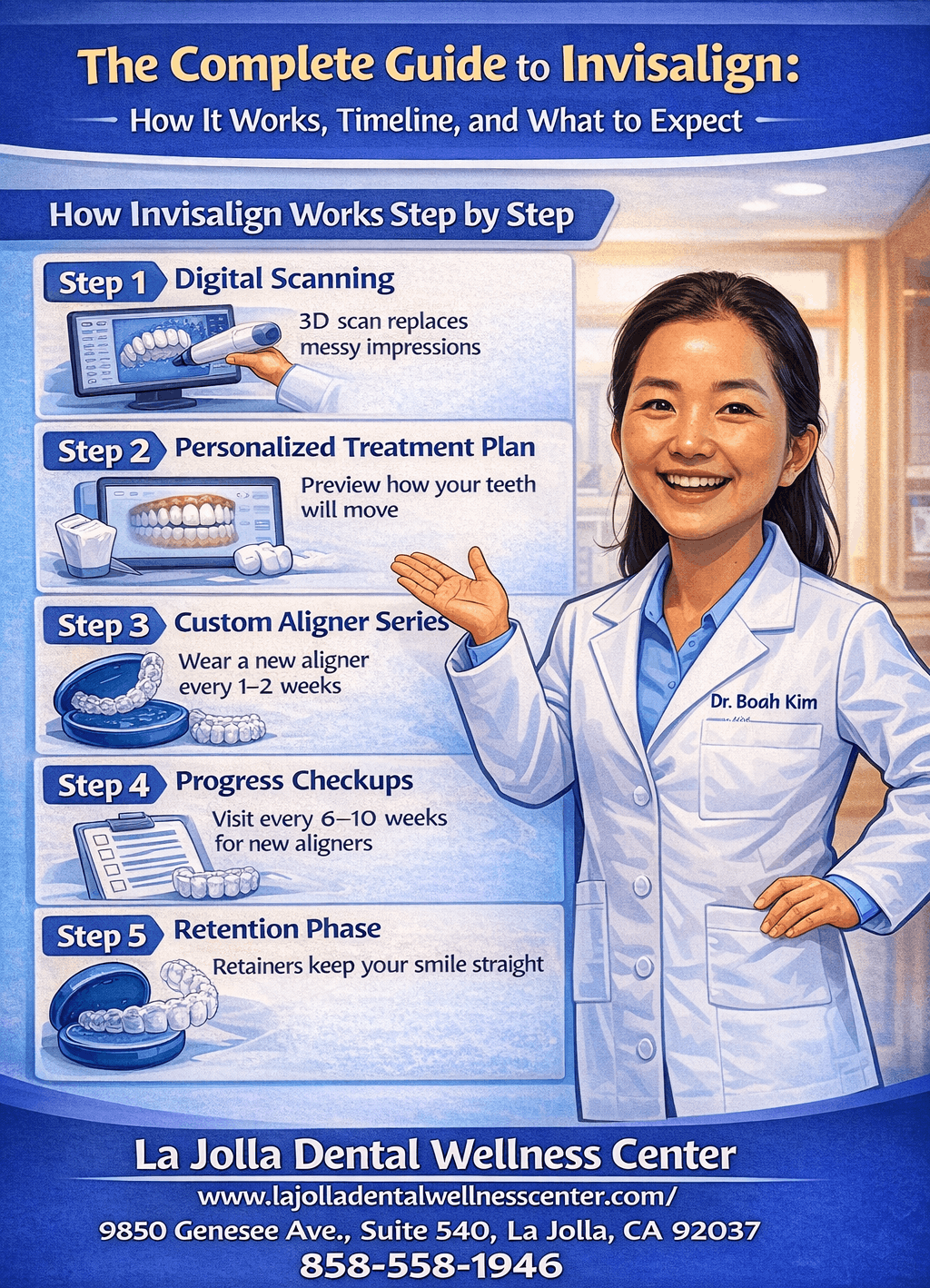
How Invisalign Works Step by Step
Invisalign is carefully planned. It is not random tooth movement.
Step 1: Digital Scanning
Your dentist takes a 3D scan of your teeth. This replaces traditional impressions.
The scan shows:
- Tooth position
- Bite alignment
- Spacing and crowding
- Areas needing correction
This digital model becomes the foundation of your treatment plan.
Step 2: Personalized Treatment Plan
Specialized software maps the movement of each tooth from start to finish.
This allows:
- Controlled staging
- Predictable progress
- Clear treatment goals
Many patients can preview a digital simulation of how their smile may look after treatment. This helps set realistic expectations.
Step 3: Custom Aligner Series
A series of aligners is made specifically for your case.
Each tray applies gentle pressure to certain teeth.
Teeth move little by little.
Movement is gradual because teeth and bone need time to adapt safely.
Step 4: Progress Checkups
Checkups usually happen every 6–10 weeks.
Your dentist:
- Monitors tracking
- Provides new aligners
- Makes small adjustments if needed
These visits help keep treatment on track.
Step 5: Retention Phase
After active treatment, retainers maintain results.
Teeth can naturally shift with age.
Retention protects your investment.
Most patients wear retainers at night long term.
What Invisalign Can Correct
Invisalign works best for mild to moderate cases.
Common concerns treated include:
- Crowded teeth
- Small gaps
- Mild overbite
- Mild underbite
- Minor crossbite
- Teeth that shifted after braces
In clinical practice, many adults in La Jolla seek Invisalign because their teeth moved after orthodontic treatment in their teen years.
Not every case qualifies. Proper evaluation is important.
Who Is a Good Candidate for Invisalign?
Invisalign works well when the case and the patient are a good match.
Good candidates often:
- Have healthy teeth and gums
- Have mild to moderate alignment issues
- Can wear aligners 20–22 hours daily
- Follow instructions consistently
Clear aligners reward consistency.
It may not be ideal for:
- Severe bite problems
- Major jaw discrepancies
- Patients who forget to wear trays
A consultation helps determine suitability.
Invisalign Timeline: How Long Does It Take?
Treatment time depends on complexity.
Mild Cases
Often 6–12 months.
Moderate Cases
Often 12–18 months.
Refinement Phase
Some patients need small refinements for detail work.
Teeth move biologically. Safe movement cannot be rushed.
Patients who wear aligners as instructed often finish closer to their projected timeline.
What to Expect in Daily Life
The First Days with a New Tray
You may feel:
- Mild pressure
- Tightness
- Slight soreness
This usually fades within a few days.
It means the aligners are working.
Speaking with Aligners
Some notice a small lisp at first.
It usually improves quickly.
Eating and Drinking
Aligners are removed for meals.
Benefits:
- No food restrictions
- Easier brushing and flossing
- Less trapped food compared to braces
Only water should be consumed while wearing aligners.
Cleaning Routine
Patients should:
- Brush before reinserting trays
- Clean aligners daily
- Avoid hot water that can warp plastic
Invisalign vs Braces
Both can straighten teeth. The choice depends on the case.
Invisalign
- Nearly invisible
- Removable
- Easier hygiene
- Fewer emergency visits
Braces
- Always working
- Often better for complex cases
- No compliance concerns
Neither is universally better.
Case selection matters.
Real-World La Jolla Scenario
Many La Jolla professionals prefer Invisalign because it fits social and work settings. Patients in meetings, events, and public-facing roles often want a discreet option.
Those who succeed most treat aligner wear like brushing their teeth. It becomes part of the routine.
Does Invisalign Hurt?
Most patients feel pressure, not pain.
Discomfort is usually:
- Temporary
- Mild
- Manageable
If aligners feel very painful, a dental check is important.
What Can Slow Invisalign Progress?
- Not wearing aligners enough
- Skipping checkups
- Losing trays
- Poor oral hygiene
Healthy gums help teeth move predictably.
How to Get the Best Invisalign Results
- Wear aligners 20–22 hours daily
- Keep appointments
- Brush and floss regularly
- Use retainers after treatment
- Follow dentist instructions
Small habits create strong results.
Are Invisalign Results Permanent?
Results can last long term with retention.
Teeth naturally shift with age.
Nighttime retainer wear helps maintain alignment.
Invisalign for Adults
Invisalign is popular among adults because:
- It is subtle
- Fits busy schedules
- Supports professional confidence
- Makes hygiene easier
Many adults are surprised to learn they qualify.
Age is rarely the barrier. Oral health matters more.
Clinical Decision Summary
Invisalign works best when:
- Cases are well selected
- Patients wear aligners consistently
- Oral health is stable
- Retainers are used after treatment
Clear aligners are a strong tool when matched to the right plan.
Common Invisalign Questions
Can Invisalign fix crowded teeth?
Yes, many mild and moderate cases.
Is Invisalign only cosmetic?
No. It can improve bite function.
Can teens use Invisalign?
Yes, with good compliance.
Will people notice?
Most people do not.
How to Know if Invisalign Is Right for You
Online quizzes cannot evaluate bite, bone, or gum health.
A professional scan and exam give real answers.
If you are exploring Invisalign options locally, a personalized evaluation helps you understand what is realistic for your smile.
At La Jolla Dental Wellness Center, Invisalign planning focuses on healthy movement, natural results, and long-term stability. No treatment is recommended unless it is right for your teeth.
A Comfortable Next Step
If straighter teeth have been on your mind, you do not have to decide right away.
Many patients start with a simple consultation to:
- See their digital scan
- Learn their options
- Ask questions
- Understand timelines
You can request a visit, message the office, or speak with the team about scheduling when it feels right for you.
Reach out at 858-558-1946 to explore your Invisalign options.
A confident smile begins with a plan that fits your life.