
Dental implants are designed to be a long-lasting solution for missing teeth. Many patients in La Jolla choose implants because they want stability, function, and confidence that lasts.
But here’s something that often gets overlooked.
Implants are strong. They are not maintenance-free.
If you want your dental implants to function comfortably for many years, long-term care matters. The good news is that implant maintenance is straightforward when you understand what to do.
Let’s walk through what proper implant care really looks like.
Why Maintenance Matters for Dental Implants
A dental implant is made of titanium and does not decay like a natural tooth. However, the surrounding gum tissue and bone are still vulnerable to inflammation and infection.
The most common long-term complication with implants is peri-implant disease. This condition affects the gum and bone around the implant and can lead to bone loss if untreated.
The key to preventing complications is consistent home care combined with regular professional monitoring.
Patients who follow a structured maintenance protocol often enjoy stable implants for decades.
Daily Home Care: The Foundation of Implant Longevity
Long-term implant success begins at home.
Brushing
Brush at least twice per day using a soft-bristled toothbrush. Electric toothbrushes can be helpful because they provide consistent motion and remove plaque effectively.
Pay close attention to the gumline around the implant crown. Plaque accumulation near the tissue is what leads to inflammation.
Non-abrasive toothpaste is recommended to protect the implant restoration surface.
Flossing
Flossing is essential.
Standard dental floss may work, but many implant patients benefit from:
- Implant-specific floss
- Water flossers
- Interdental brushes
The goal is to clean beneath the crown and along the gumline without damaging tissue.
Skipping flossing increases the risk of peri-implant inflammation over time.
Antibacterial Rinses
Your dentist may recommend a non-alcohol antimicrobial rinse if you’re at higher risk for gum disease.
However, rinses should support brushing and flossing, not replace them.
Professional Maintenance Visits
Routine dental visits are just as important as home care.
Most implant patients in La Jolla are advised to maintain hygiene visits every three to six months, depending on their risk factors.
During these visits, your dental team will:
- Check gum health around the implant
- Measure tissue depth
- Take periodic X-rays to monitor bone levels
- Professionally clean around the implant crown
Implants require specific instruments for cleaning to avoid scratching the surface. This is why professional implant maintenance is different from a standard cleaning.
Early detection of inflammation makes treatment much easier.
Occlusion and Bite Monitoring
One aspect of implant care that many patients don’t consider is bite stability.
Unlike natural teeth, implants do not have a periodontal ligament. This means they do not absorb pressure the same way.
If bite forces are uneven or if grinding is present, excessive pressure can stress the implant or surrounding bone.
For patients who grind their teeth at night, a custom night guard may be recommended to protect both implants and natural teeth.
Bite adjustments, when necessary, help prevent long-term mechanical complications.
Lifestyle Factors That Affect Implant Longevity
Certain habits influence how long implants last.
Smoking
Smoking significantly increases the risk of implant complications because it reduces blood flow and healing capacity.
Patients who smoke are at higher risk for peri-implant disease.
Grinding or Clenching
Bruxism places excess force on implant restorations. Protective appliances can reduce stress.
Overall Health
Conditions such as uncontrolled diabetes can affect healing and long-term tissue health.
Candid conversations about medical history allow your dentist to customize your maintenance protocol.
Warning Signs That Require Evaluation
Dental implants rarely fail suddenly. Problems usually develop gradually.
You should contact your dentist if you notice:
- Bleeding around the implant
- Swelling or tenderness
- Persistent bad taste
- Looseness of the crown
- Discomfort while chewing
Early intervention often prevents more serious complications.
How Long Do Dental Implants Last?
With proper care, dental implants can last many years, often decades.
Research shows high long-term success rates when implants are placed correctly and maintained properly. However, longevity depends on:
- Bone health
- Oral hygiene
- Bite forces
- Lifestyle habits
The implant itself may last decades, while the crown may eventually need replacement due to normal wear.
A personalized maintenance plan helps extend both.
Special Considerations for Full-Arch Implant Restorations
Patients with implant-supported bridges or full-arch restorations require additional cleaning attention.
Floss threaders, water flossers, and specialized brushes are often necessary to clean beneath fixed prosthetics.
Professional maintenance visits may include removing the restoration periodically to evaluate underlying tissue.
These appointments are essential to long-term success.
What Makes Implant Maintenance Different From Natural Teeth?
Implants do not decay, but they are not immune to disease.
The surrounding gum tissue must remain healthy to support bone stability.
Unlike natural teeth, implants lack sensory feedback. You may not feel early inflammation.
That’s why routine monitoring is critical.
Implant maintenance is about preserving the supporting structure, not just cleaning the crown.
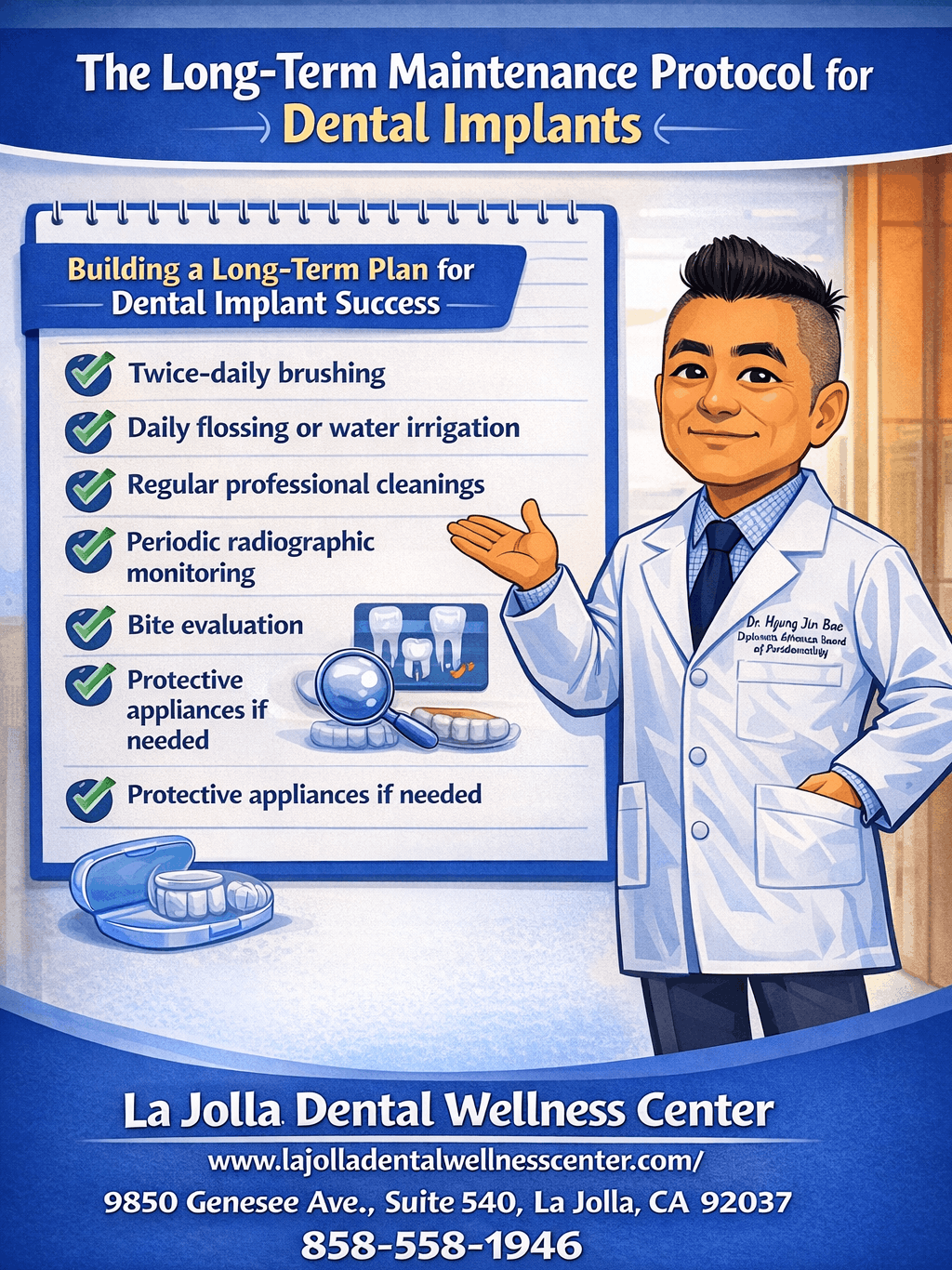
Building a Long-Term Plan for Dental Implant Success
A long-term maintenance protocol typically includes:
- Twice-daily brushing
- Daily flossing or water irrigation
- Regular professional cleanings
- Periodic radiographic monitoring
- Bite evaluation
- Protective appliances if needed
Consistency matters more than complexity.
Patients who treat implant care as part of their daily routine usually experience stable, predictable results.
FAQs About Dental Implant Maintenance
Do implants require more care than natural teeth?
Not more care, but consistent care. The surrounding tissue must remain healthy to protect the implant.
Can implants get infected?
Yes. While the implant itself cannot decay, the surrounding gum and bone can develop infection if plaque accumulates.
How often should implants be professionally cleaned?
Most patients benefit from cleanings every three to six months, depending on risk factors.
What happens if an implant crown wears out?
The crown can typically be replaced without removing the implant itself.
Protecting Your Investment in La Jolla
Dental implants are a long-term investment in your health and confidence.
Patients in La Jolla, UTC, Pacific Beach, and surrounding San Diego communities often choose implants because they want a stable, natural-feeling solution.
A strong maintenance protocol protects that investment.
If you have dental implants or are considering them, a consultation allows your dentist to evaluate your current bone health, review your hygiene routine, and build a personalized maintenance plan designed for long-term stability.
Dental implants are built to last. With the right care, they can continue to function comfortably for many years.