
Dental veneers are one of the most requested cosmetic dentistry treatments today. They can improve color, shape, spacing, and overall smile balance.
But before choosing veneers, many patients ask an important question:
What is the difference between porcelain and composite veneers, and how long do they really last?
The answer is not just about appearance. It involves durability, tooth preservation, lifestyle habits, and long-term maintenance.
If you are considering veneers in La Jolla or the greater San Diego area, this guide explains the differences clearly so you can make an informed and healthy decision.
What Are Dental Veneers?
Veneers are thin layers of tooth-colored material placed on the front surface of teeth. They are designed to improve appearance while preserving natural tooth structure whenever possible.
Veneers can help with:
- Deep staining that whitening cannot fix
- Chipped or worn teeth
- Small gaps
- Slight misalignment
- Uneven shapes or sizes
They are cosmetic, but they still require careful bite planning and oral health evaluation.
At La Jolla Dental Wellness Center, veneers are planned with both esthetics and function in mind. A smile should look natural and feel comfortable in daily life.
The Two Main Types of Veneers
There are two common veneer materials:
- Porcelain veneers
- Composite resin veneers
Both can improve a smile. They differ in strength, longevity, cost, and how they are made.
Neither is automatically better. The right choice depends on the patient.
What Are Porcelain Veneers?
Porcelain veneers are thin ceramic shells custom made in a dental lab and bonded to the tooth.
Benefits of Porcelain Veneers
Natural appearance
Porcelain reflects light similarly to enamel, creating a lifelike look.
Strong stain resistance
Porcelain resists staining from coffee, tea, and wine better than composite.
Long lifespan
With good care, many porcelain veneers last 10–15 years or longer.
Color stability
They keep their shade well over time.
Considerations
- Usually requires two visits
- Higher upfront cost
- Small enamel reshaping is often needed
- Considered a long-term commitment
Porcelain is often chosen by patients seeking lasting smile improvements for weddings, professional image, or major life events.
In La Jolla, many patients preparing for milestone events choose porcelain for its durability and polish.
What Are Composite Veneers?
Composite veneers use tooth-colored resin shaped directly on the teeth. Many cases are completed in one visit.
Benefits of Composite Veneers
Conservative approach
Less enamel removal is usually needed.
Lower initial cost
More budget friendly at the start.
Same-day results
Often completed in a single appointment.
Repairable
Small chips can often be fixed without replacing the veneer.
Considerations
- More prone to staining
- Shorter lifespan
- Slightly less translucency than porcelain
- May need polishing or repairs over time
Composite can be a good option for minor corrections or younger patients not ready for long-term porcelain.
How Long Do Veneers Last?
Longevity depends on material and habits.
Porcelain Veneer Longevity
Many last 10–15+ years with:
- Good brushing and flossing
- Regular checkups
- Avoiding ice chewing or nail biting
- Wearing a nightguard if grinding
Some patients maintain them even longer.
Composite Veneer Longevity
Composite veneers often last 4–8 years.
They may need:
- Polishing
- Small repairs
- Earlier replacement
They can still be valuable when chosen thoughtfully.
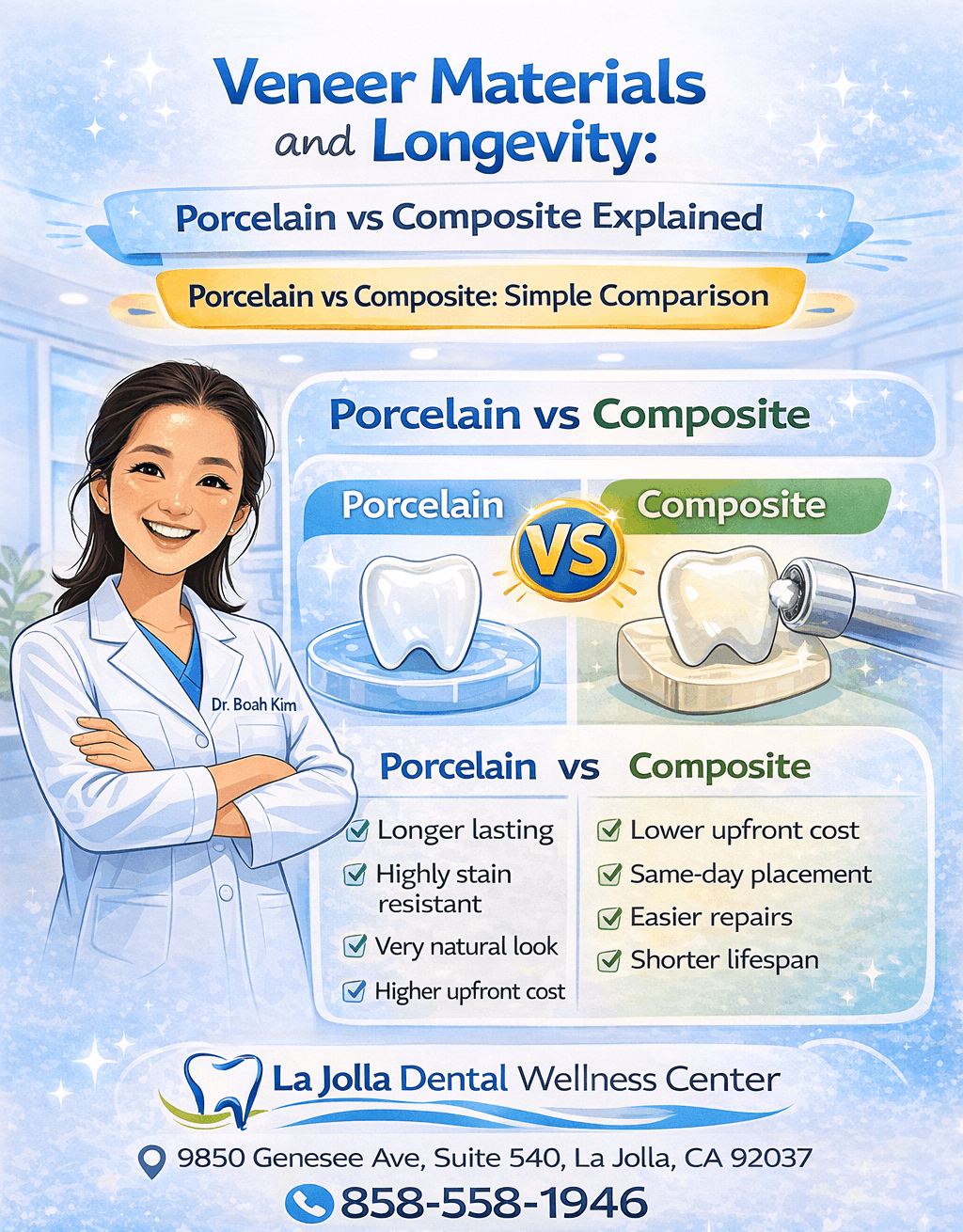
Porcelain vs Composite: Simple Comparison
Porcelain
- Longer lasting
- Highly stain resistant
- Very natural look
- Higher upfront cost
Composite
- Lower upfront cost
- Same-day placement
- Easier repairs
- Shorter lifespan
A helpful rule is:
Porcelain is often a long-term solution. Composite can be a short- to mid-term solution.
How Dentists Help You Choose
A good cosmetic plan is personalized.
Dentists evaluate:
- Tooth condition
- Bite alignment
- Gum health
- Smile symmetry
- Patient goals
- Budget and timeline
The goal is to protect your natural teeth whenever possible.
In clinical practice, many patients start with composite and later move to porcelain once they are ready for a longer-term investment. Both paths can be appropriate when planned carefully.
A Real-World La Jolla Scenario
A common situation in La Jolla is patients who had bonding years ago and now want a brighter, longer-lasting upgrade. These patients often transition to porcelain for durability and stain resistance.
Another group includes younger professionals who choose composite first while planning porcelain later.
Both are valid when guided by a dentist who prioritizes tooth health.
Are Veneers Permanent?
Because a small amount of enamel is often reshaped, veneers are considered a long-term commitment.
That is why planning matters.
Ethical cosmetic dentistry focuses on preserving natural teeth, not over-treating them.
Do Veneers Damage Teeth?
When done correctly, veneers do not damage teeth.
Problems happen when:
- Teeth are over-prepared
- Bite is ignored
- Oral health is not evaluated
- Poor materials are used
Proper diagnosis protects your smile.
At La Jolla Dental Wellness Center, veneer planning includes bite analysis and health checks before cosmetic work begins.
Who Is a Good Candidate for Veneers?
Veneers work well for patients who:
- Have healthy teeth and gums
- Want cosmetic improvements
- Maintain good hygiene
- Use protection if they grind
They may not be ideal for:
- Untreated decay
- Active gum disease
- Severe bite issues
- Very weak enamel
A cosmetic consultation helps determine this.
Clinical Decision Summary
Porcelain veneers suit patients seeking long-lasting, stain-resistant, highly natural results.
Composite veneers suit patients wanting conservative or shorter-term improvements.
Both can look beautiful when chosen wisely.
Good cosmetic dentistry is about balance, not trends.
Common Veneer Questions FAQs
Do veneers feel natural?
Yes. Once bonded, they feel similar to natural teeth.
Can veneers whiten?
No. Shade is selected beforehand.
Can veneers fall off?
It is uncommon but possible. Proper bonding reduces risk.
Are veneers high maintenance?
Daily hygiene and checkups are usually enough.
How to Know Which Veneer Is Right for You
Online photos and social media cannot evaluate bite or enamel health.
A professional exam is the only reliable way to plan safely.
If you are considering veneers in La Jolla or San Diego, a consultation helps you understand realistic options.
La Jolla Dental Wellness Center provides cosmetic evaluations focused on natural-looking results and long-term oral health.
No treatment is recommended unless it is right for your teeth.
Gentle Next Step
If improving your smile has been on your mind, a consultation is a comfortable first step. You can ask questions, review options, and decide without pressure. Call 858-558-1946 to schedule a cosmetic consultation.
A confident smile starts with thoughtful planning.